The square that dreamt to be a circle
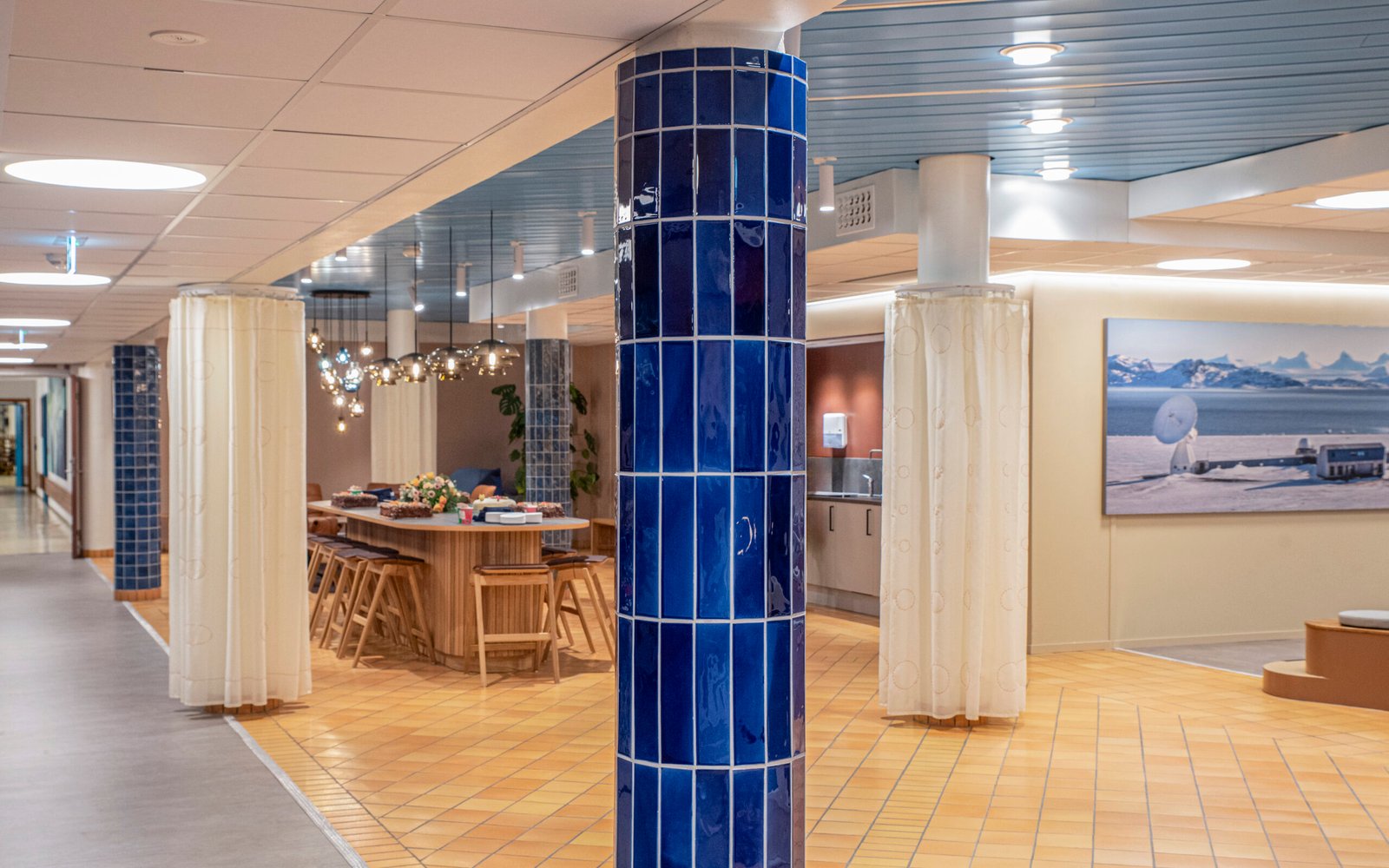
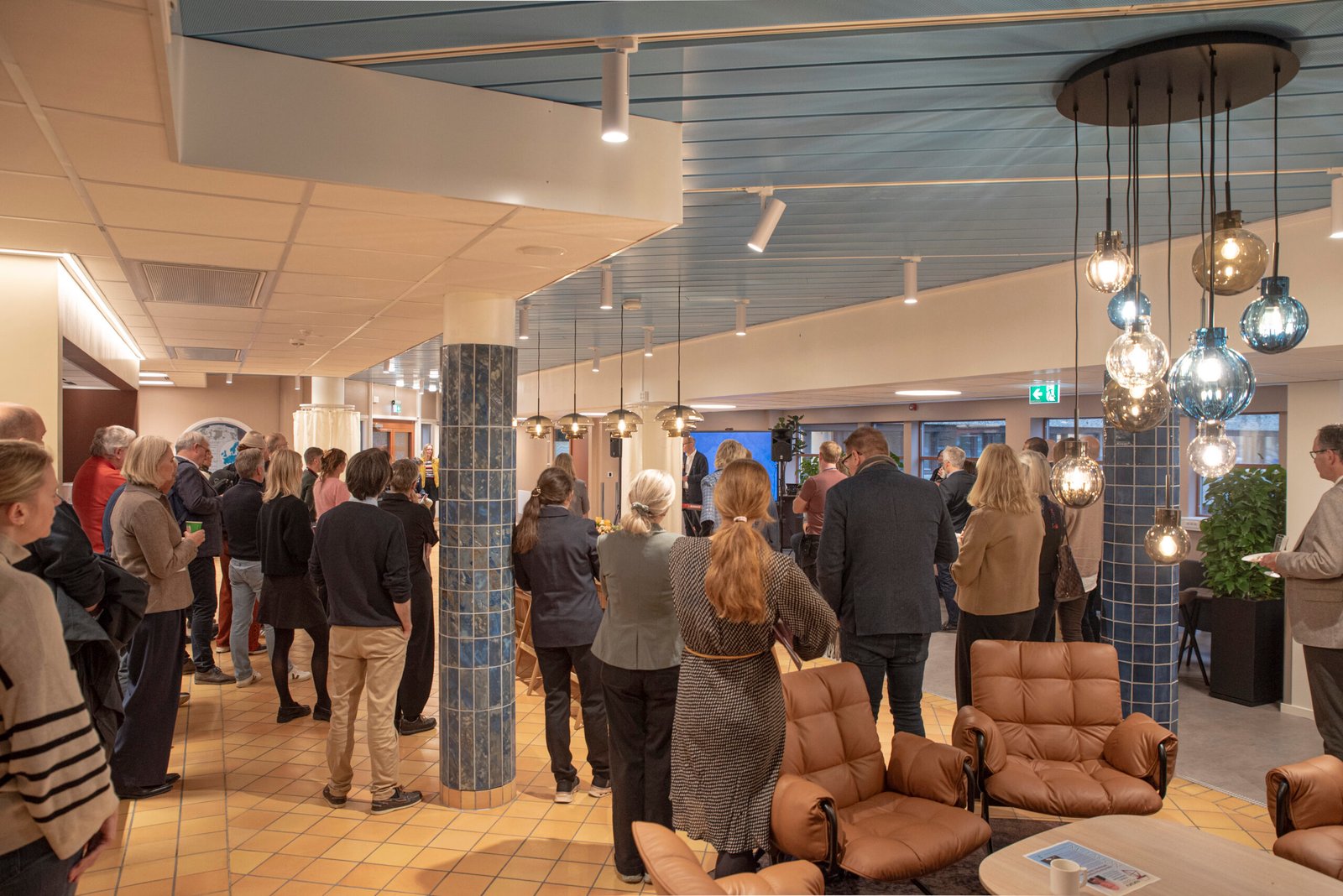
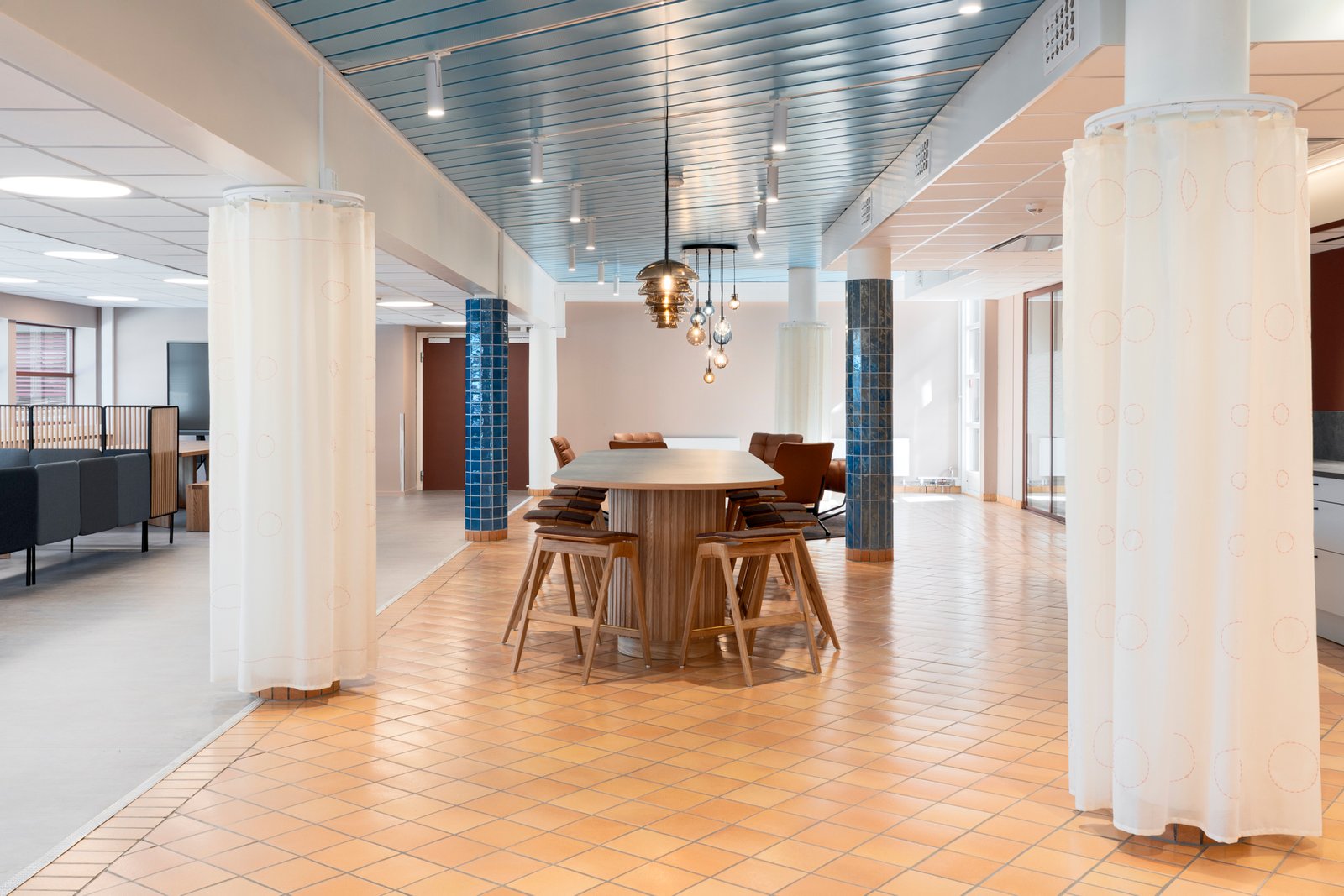
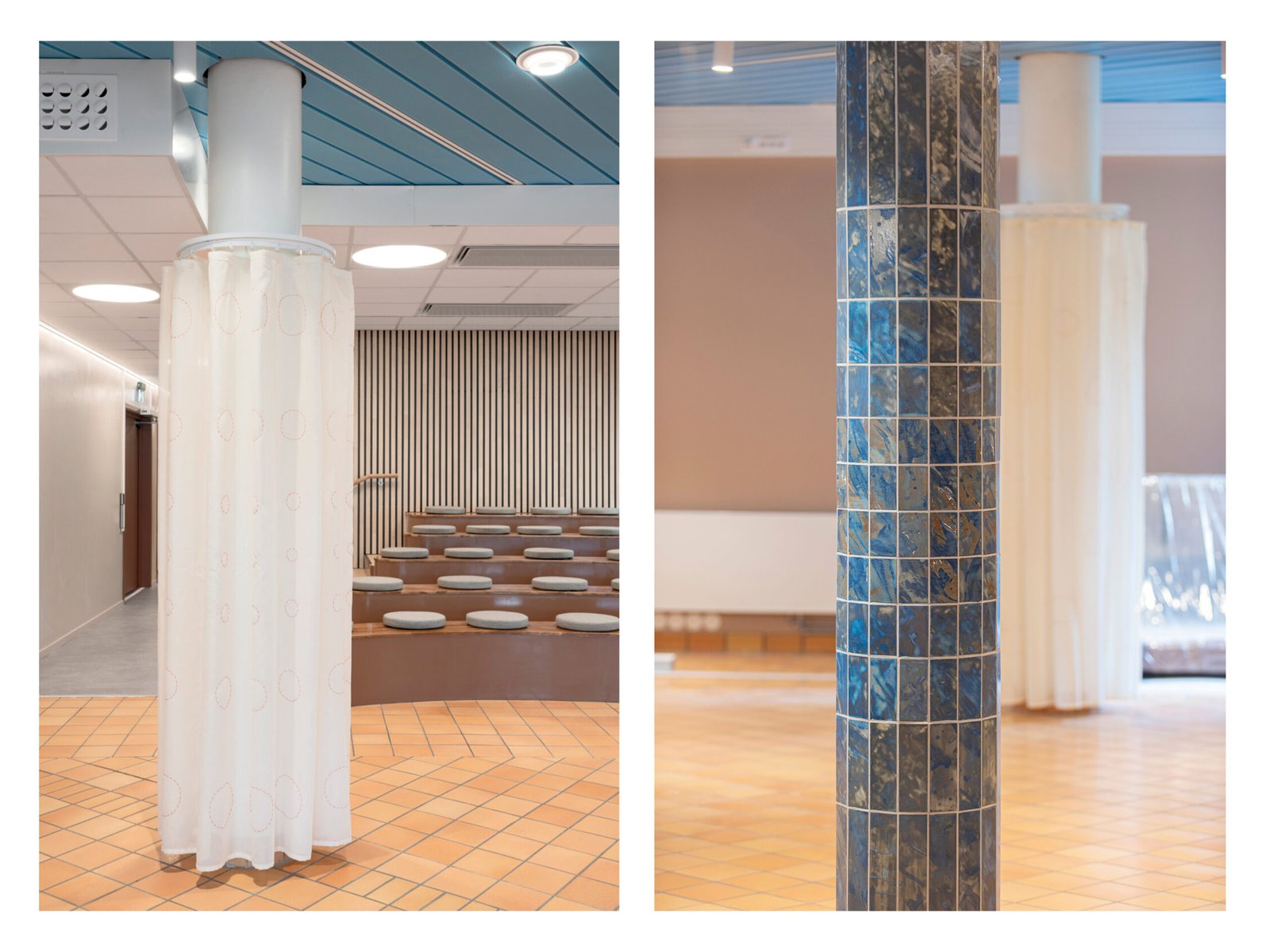
In-situ installation, in "torget", the central meeting point of Kartverket's headquarters in Hønefoss, 2026
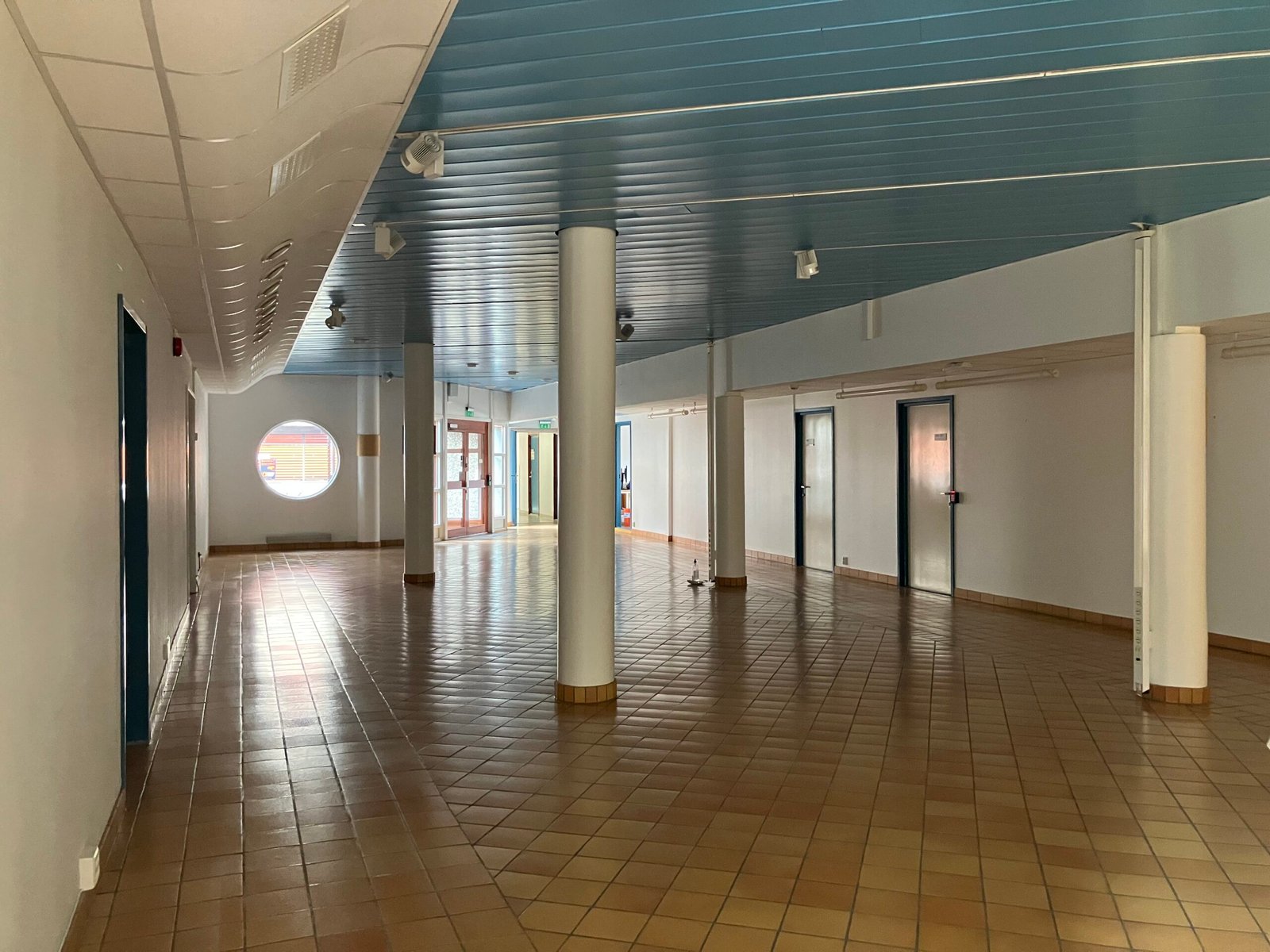
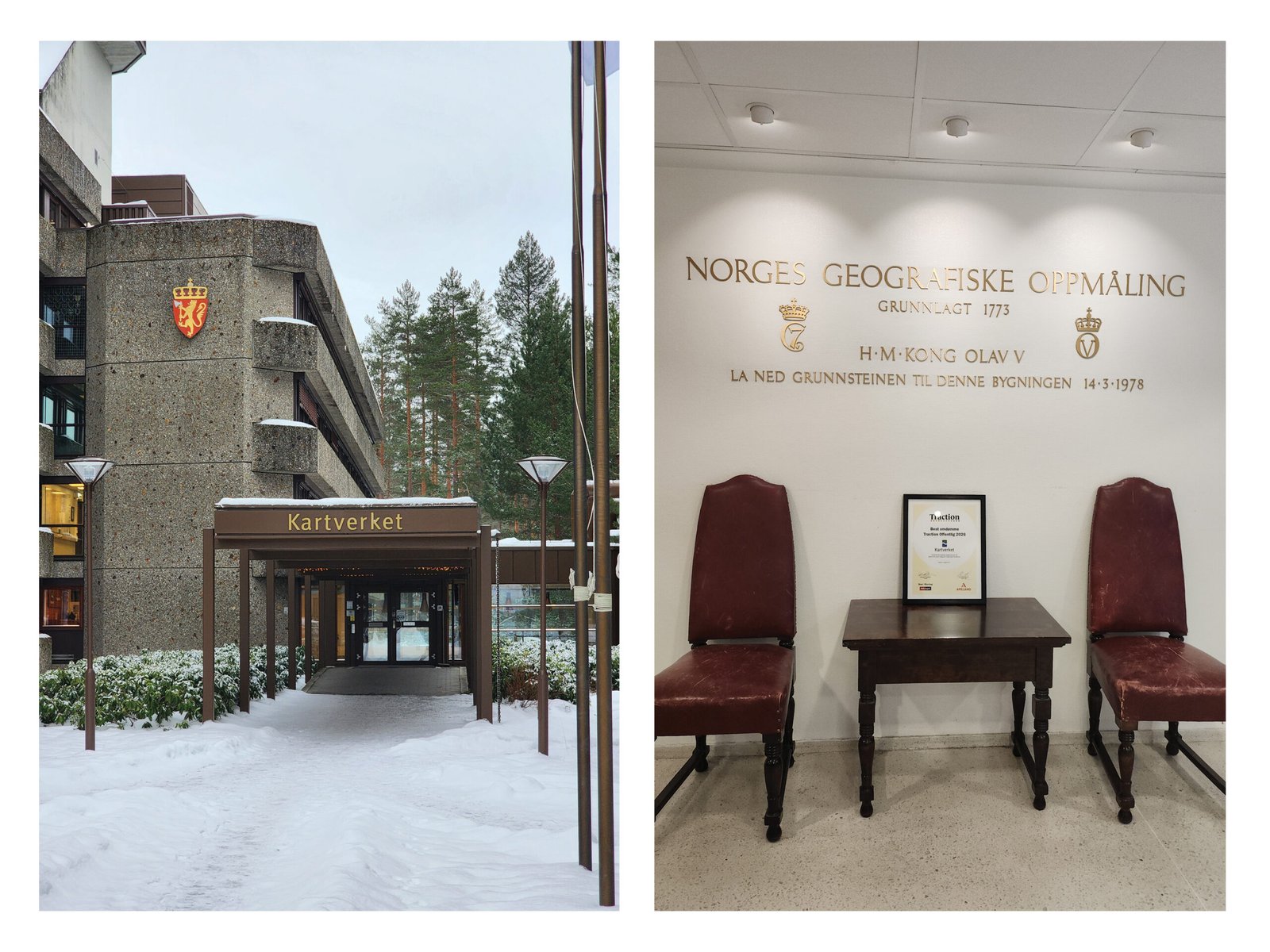
The square that dreamt to be a circle is an in-situ installation conceived for « torget », the central meeting point of Kartverket’s headquarters in Hønefoss. In Norwegian, torget refers to the open, central square of a town, traditionally used for markets, commerce and public gatherings.
The room carries the same ambition: a place where people can come and be together, sit down and relax. When translated, torget becomes “the square”, giving it a geometrical dimension. The project was born from that small distortion, carrying a double metaphor.
The first metaphor refers to the room itself. Geometrically speaking, the circle is often employed as a symbol of community: it contains no angles, it has no beginning nor end, and every point stands at an equal distance from its centre.
The square room is in this sense dreaming of becoming something it is not yet, and it does so at a moment when the organisation itself is moving towards a more interdisciplinary approach, a change this new space is meant to embody.
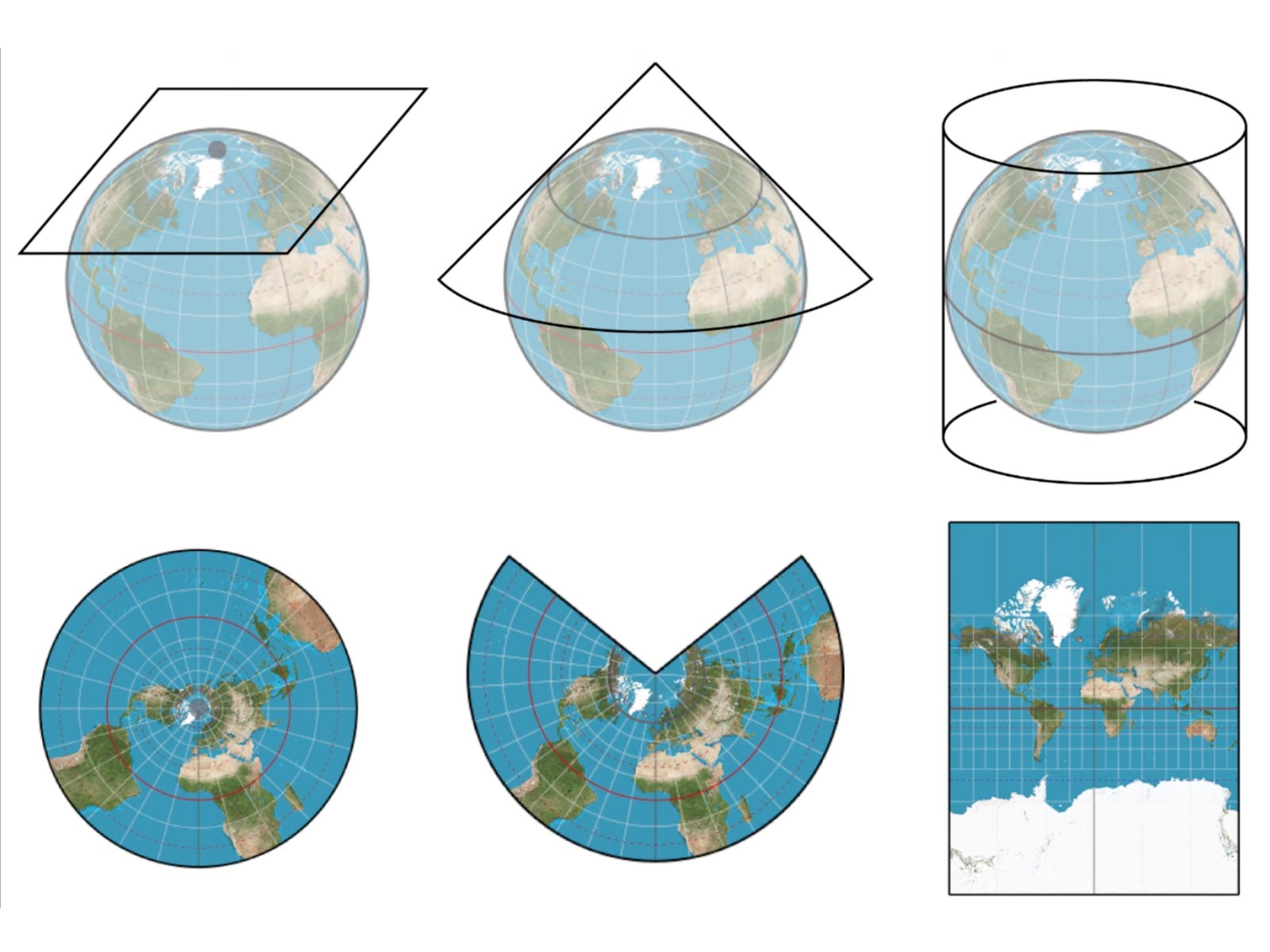
The second metaphor refers to what makes the core of Kartverket: drawing maps. The process of map creation involves transforming a three-dimensional sphere into a two-dimensional surface. Because a sphere cannot be perfectly flattened, every projection distorts either shape, area, distance or direction. Every projection involves tradeoffs: something is always given up. The title plays poetically with this idea.
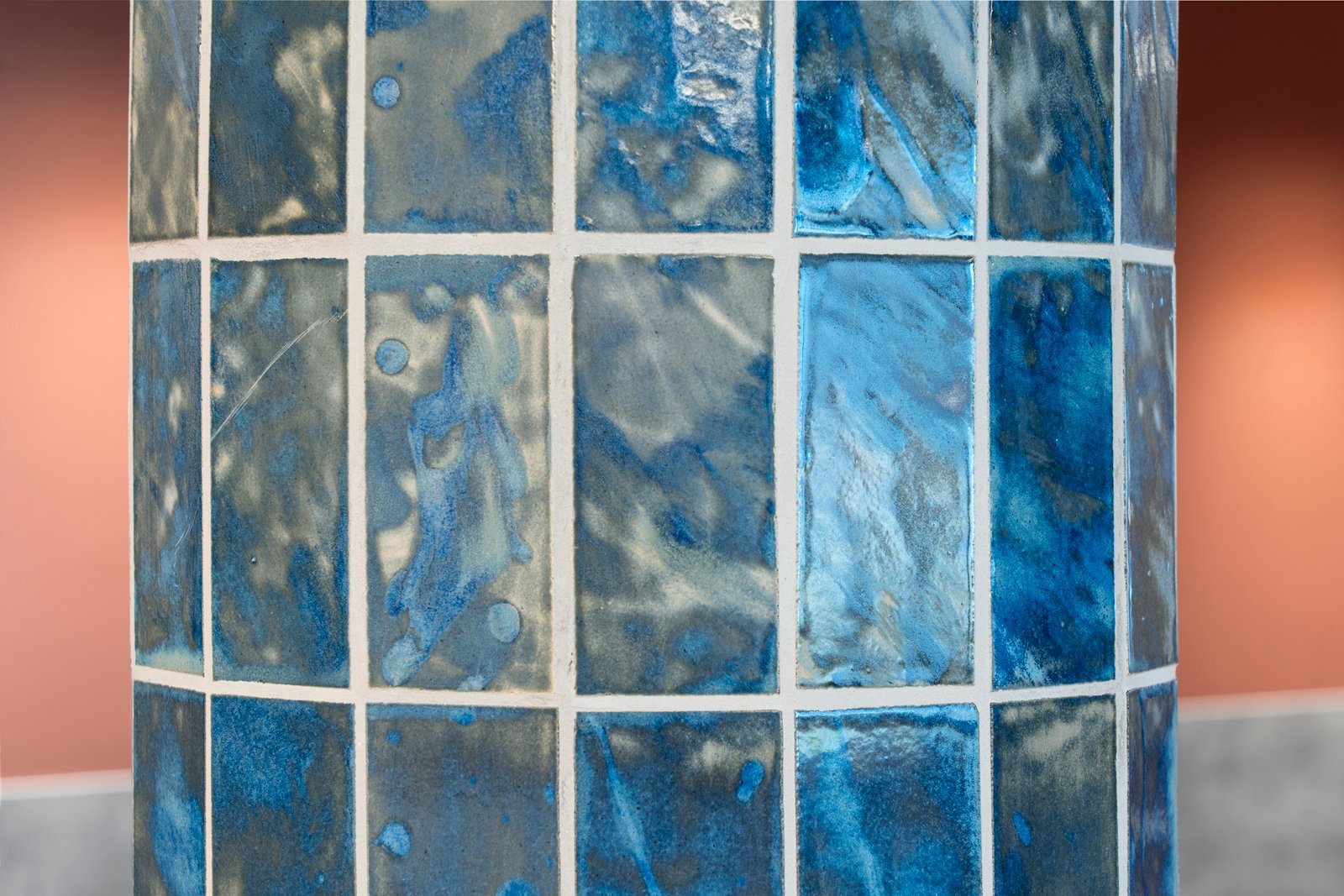
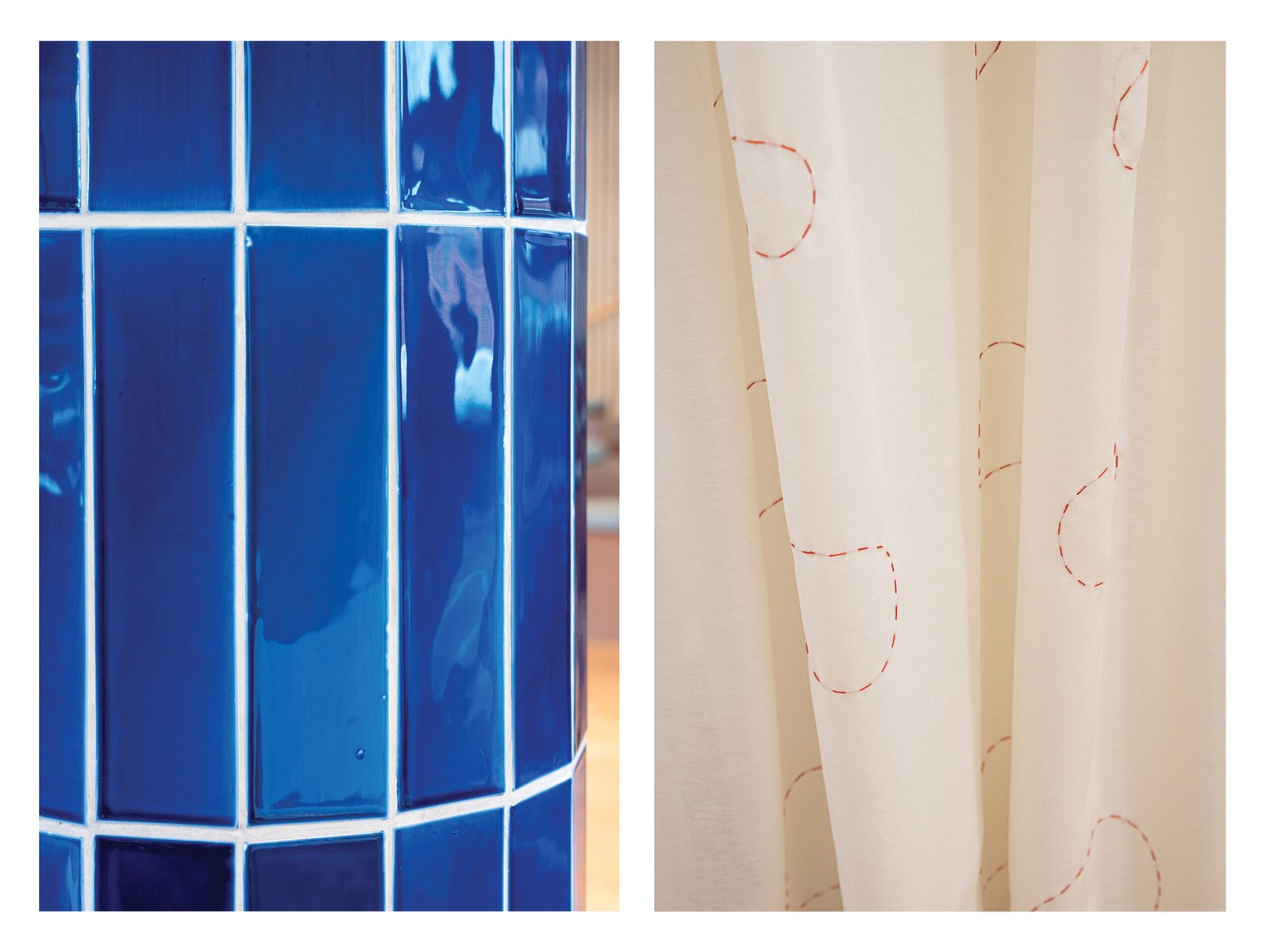
The project unfolds around six columns. On three of them, ceramic tiles mimic different map projections (Gall-Peters, Mercator and equirectangular). Each tile represents a rectangle formed by a longitude and a latitude line. Displayed all together, each column takes the overall look of one specific projection, none preferred over the others.
Around the three other columns hang long circular off-white curtains, bringing warmth, lightness, and contrast to the heavy and vibrant ceramic, and creating a rhythm within the room. Circles and ovals, referring to Tissot’s indicatrix, are sewn onto the curtains. They are a measure of the distortion happening during the process of flattening a map projection. The curtains move slightly as people walk past them.
The round columns were both a challenge and an asset. They became the sculptural link between the architecture of the room and the vocabulary of cartography. A cylindrical projection is nothing more than a sheet of paper wrapped around a cylinder, which the space already contained. Like a globe, a column never shows itself entirely. It needs to be walked around. From a distance, the tiles form a single projection. From up close, each one unveils its own variations of color, depth and texture. The square keeps dreaming: a flat surface doing its best to represent a sphere, without ever being able to fully achieve it. But the analogy ends here. A map is fixed the moment it is drawn. The room is not: it is reimagined again every day, by whoever crosses it, walks around the columns and sits down for a while.
Arek Kouyoumdjian 2026